



“Comparison of Average Age Between LPL and LCK” Sparks Discussion, Gen Emerges as the Oldest Team, Karsa Responds to Match-Fixing Allegations



Introduction: The S16 season has officially commenced, and it is believed that most players have been following the recent competitions. All major regions have entered a brief offseason period, with the Global Pioneer Tournament about to begin. Over the past few years, the popularity of the esports industry has declined rapidly, largely due to the retirement of veteran players, which has led to a decrease in overall viewership. Many players have left the professional stage citing age as the reason, but is that truly the case? A netizen compiled statistics on the average age of teams in the LPL and LCK regions, revealing that top-tier mid-laner Faker is the oldest player, while the LCK champion team Gen has the highest average age. Jungler Karsa also publicly addressed allegations of match-fixing, stating that he never claimed match-fixing was acceptable.
Comparison of Average Age Among Major Teams in LPL and LCK
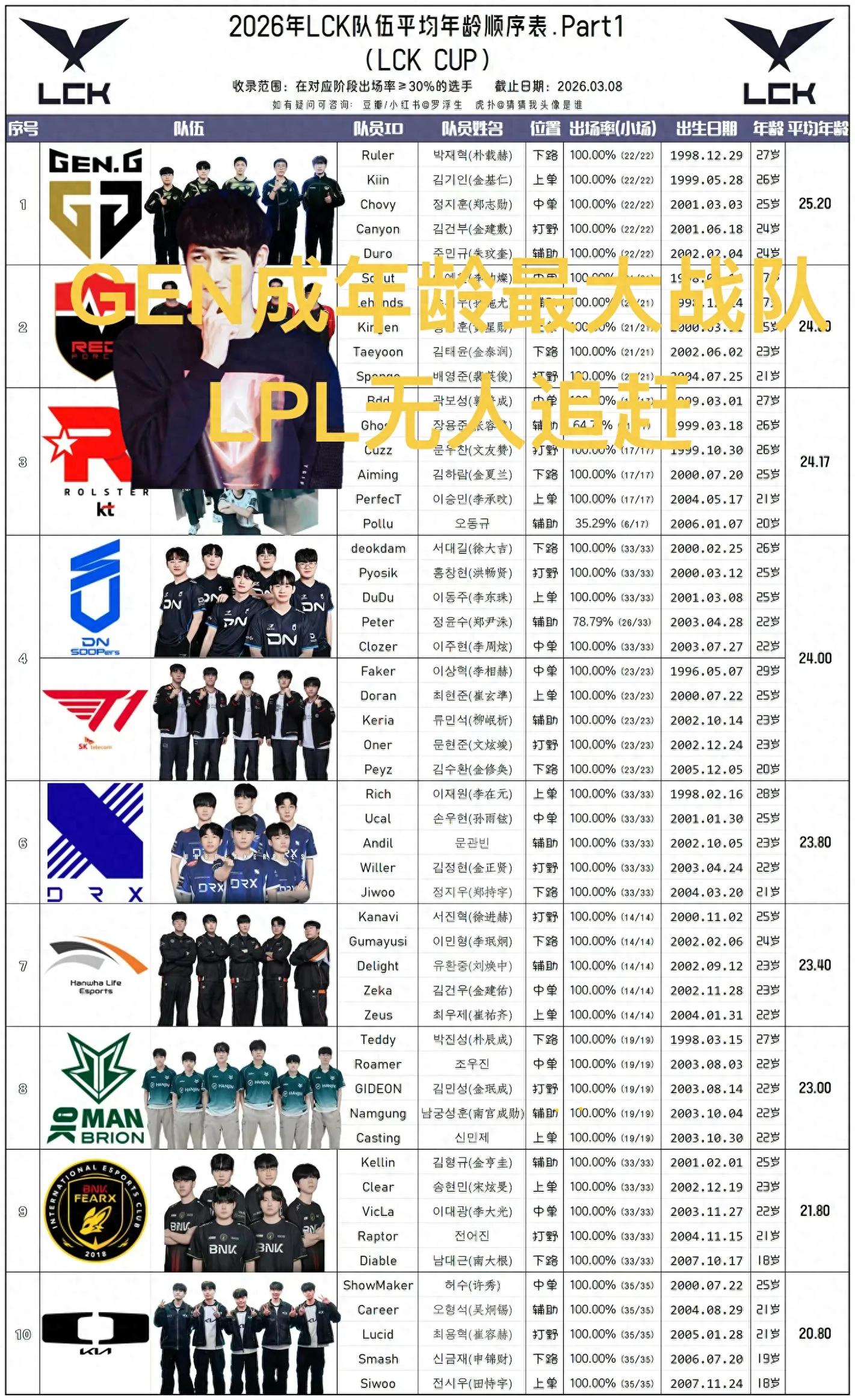
It is believed that most players are quite familiar with the LPL and LCK regions, as they serve as the backbone of League of Legends, being the core regions of the game. Over the years, the World Championship titles have alternated between these two major regions. Particularly in the LCK region, the esports industry has developed rapidly, with a well-established youth training system and significant investments each year to nurture new players. Naturally, each year also produces some exceptionally talented players that captivate fans. Recently, the popularity of the league has declined somewhat, largely due to the departure of veteran players.
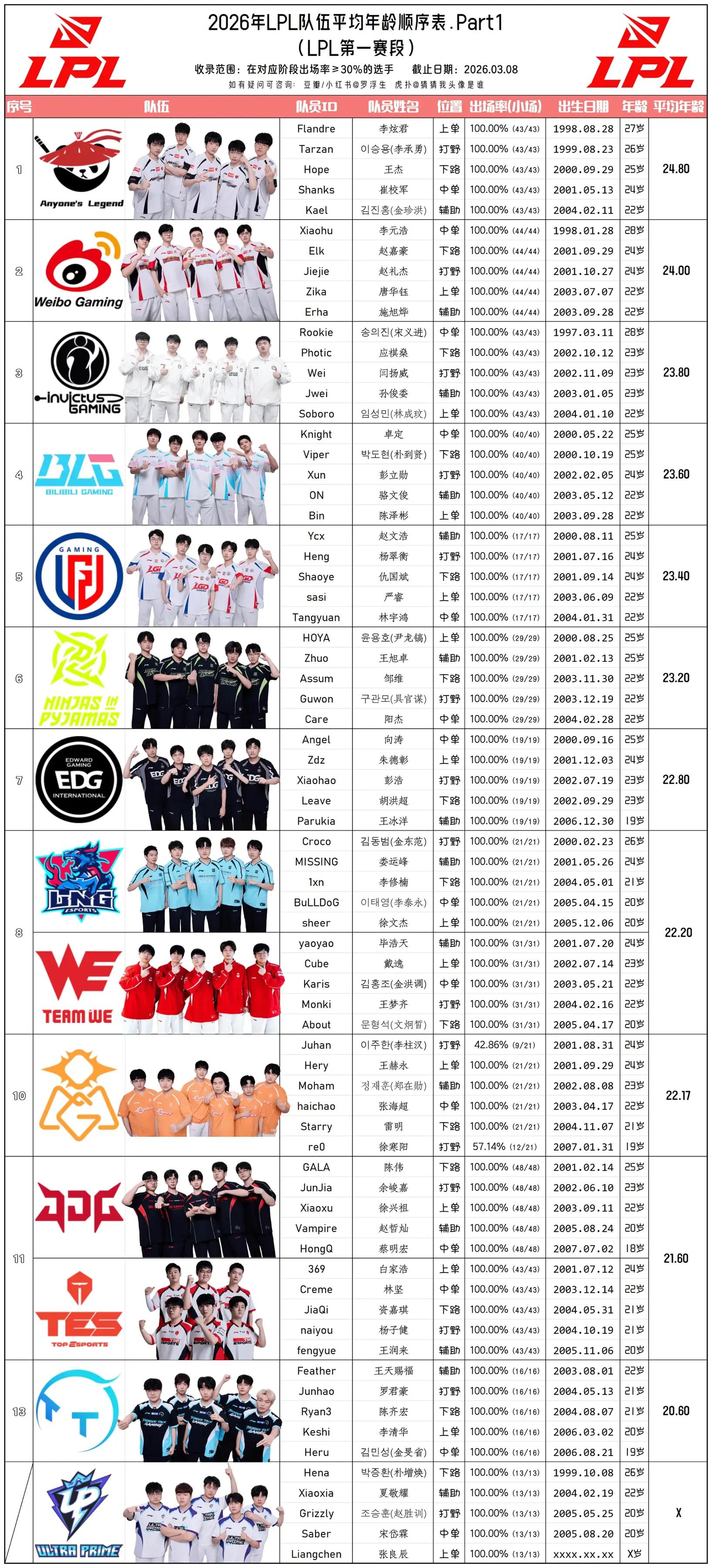
For instance, in the LPL region, Uzi’s popularity and influence were undoubtedly at their peak, even rivaling LCK’s Faker. His retirement was notified afterward, and when he sought to return after recovering his health, he faced numerous obstacles, ultimately missing his prime competitive years and becoming a casualty of capital manipulation. His current popularity remains high, but it cannot compare to his competitive days. Many LPL professional players attribute their departure to age issues. Recently, a netizen compiled statistics on the average age of teams in LPL and LCK, discovering that some top-tier LCK teams have relatively high average ages, especially the recently championed Gen team, which has the highest average age across both regions.

Looking at the Gen team: Ruler is 27 years old, Kiin is 26, Chovy is 25, Canyon and Duro are both 24, resulting in an average age of 25.2 years. The youngest team in the region is likely DK, with an average age of only 20.8 years, and their starting top-laner was born in 2007. The oldest player is T1’s mid-laner Faker, born on May 7, 1996, approaching 30 years old. In the LPL region, the oldest team is AL, with an average age of 24.8 years, while BLG has reached 23.6 years. The JDG team participating in the Pioneer Tournament is notably young, with all players being born after 2000, and mid-laner Hongq is currently the youngest player in the LPL region, born on July 2, 2007.

While a player’s age may influence performance, it is certainly not the primary factor, and there is no need to use age as an excuse. Recently, discussions on match-fixing in LPL have intensified, and jungler Karsa publicly responded, expressing his strong disdain for match-fixing. He addressed rumors spread by malicious individuals and fabricated statements attributed to him, such as “match-fixing can be done, but don’t act too obviously.” His actual words were “Match-fixing dogs should go to hell.” Honestly, as a retired professional player, he undoubtedly despises match-fixing, and it is perplexing why anyone would believe such false claims.
Final Thoughts
Currently, the world’s strongest team, Gen, has the highest average age, with core players already around 25–26 years old. Often, professional players retire not because they are too old to compete, but because they have accumulated sufficient wealth and achieved financial freedom, preparing to transition and enjoy their later lives. After all, professional competitions are endless, and once wealth is accumulated, it is entirely feasible to step back and avoid the grind. Enjoying life, indulging in leisure, is certainly more comfortable than rigorous training.
What are your thoughts on this matter, esteemed viewers?

 Links
Links
 Contact
Address:123
Number:+123
E-mali:i123@gmail.com
 App
App