



The winner is lonely! Jokic recounts his NBA journey: First paycheck spent on buying a horse



On March 9 Beijing time, among the dazzling stars of the NBA, Jokic undoubtedly stands out as one of the most unique figures. In a recent podcast interview, this NBA superstar from Serbia shed his on-court aura and openly discussed the origins of basketball, his career, family bonds, and life reflections, allowing us to glimpse a real, tender, and consistently self-steadfast Jokic behind the spotlight.
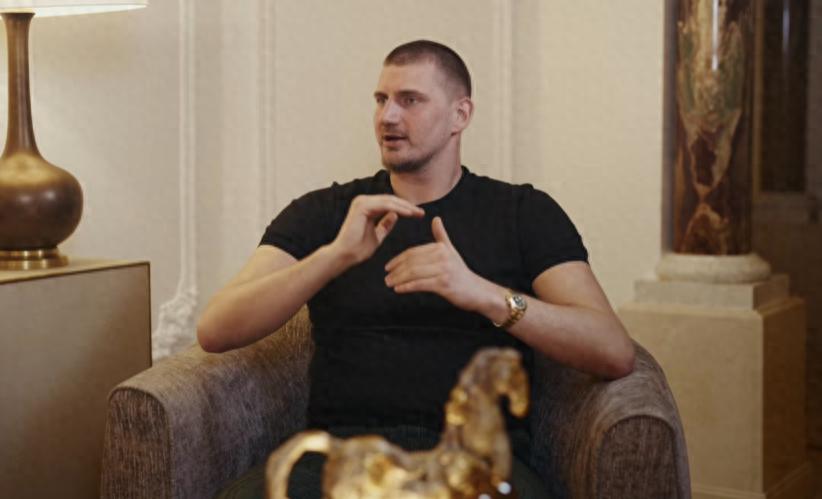
Jokic's connection with basketball began with a hoop on the family door and the daily companionship of his two older brothers. "The earliest thing I got into was basketball because my brothers played, so I just followed them."
Recalling his childhood, his tone is full of warmth and also hides a bit of childish grievance—as a kid he often challenged his brothers one against two, and if he lost he would get bullied, then cry and complain to his mom. But this seemingly "messy" interaction became the starting point of his basketball path.

His two brothers: one is a diligent, sacrificing "blue-collar model" skilled in hustle plays, the other is a gifted, all-around "potential star," whileJokic恰好吸收了两人的优点"In talent, I'm more like Nemanja; in physique and professional attitude, I'm more like Strahinja." This strength drawn from his family not only made him love basketball but also shaped his humble and respectful character—even today, he still holds reverence for his brothers, believing "older means experience, respect is duty."
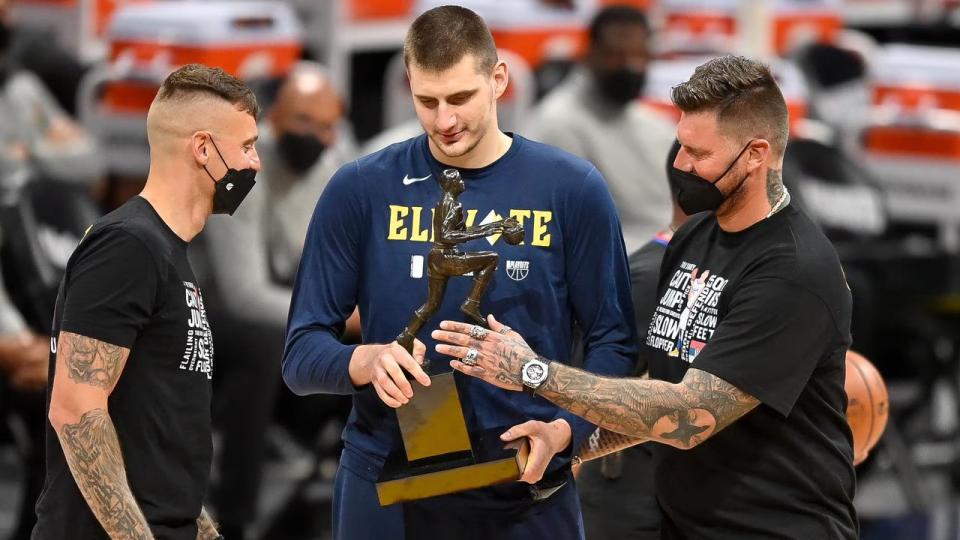
For Jokic, basketball was a "sudden" growth. His career lacks a dramatic underdog story but is marked by steady, step-by-step determination. At age 18, when he won the league MVP with Mega, he first realized he could make a living through basketball.
"At that time I could compete against top players from teams like Red Star Belgrade and Bayern Munich. I knew basketball could become my profession."
During his time at Mega, he luckily met a group of mentors. The veteran players' guidance taught him how to establish himself in a high-level league and also left him with a lasting warmth—when he once cried because he had no money to go home, teammate Lale handed him 50 euros, which he remembered for over ten years. "Talking about money among friends hurts feelings; this friendship is more precious than anything."
He also deeply appreciates coach Dejan Milojević, the mentor who gave him tactical freedom yet punished him sternly for mistakes. "He demonstrated a move once, and I could grasp it just by watching. This默契 is a precious asset in my basketball career."
The journey to the NBA was, for Jokic, a beginning of unfamiliarity and challenge. At 17, he was awakened from sleep by his brother to learn he had been drafted by the Nuggets—at that moment, he hadn't imagined the NBA would be his stage, his mind full of "where to go tomorrow for fun."
Arriving in America, he had almost nothing; the money he carried was only enough for snacks and parking fees. The team's $75,000 housing subsidy became his "救命钱" in a foreign land.

The discomfort in Summer League, barriers in language and terminology, the冲击 of game pace, and homesickness all曾让他倍感煎熬. "I dislike new things, strangers, new environments. After playing, I just wanted to go home, even if the drive took two or three hours." But this "home-loving" tenderness never became a reason for retreat.
He trained alone at the Denver arena for three to four months, practicing five or six days a week, honing skills and adapting to the pace in the empty gym. This period of solitary training gradually helped him catch up with the NBA's rhythm.
Over eleven years in the NBA, Jokic transformed from a fringe player to a superstar, yet he始终保持清醒与谦逊. He admits his self-awareness awakened late; his career rise was so rapid that he "had no time to think about where he was," and this "belated realization"反而让他脚踏实地, not floating or restless.
Even now as a top league star, he still self-criticizes and even坦言赛后 "Maybe I'm not as good as people think." This苛刻的自我要求 is not lack of confidence but reverence for basketball.
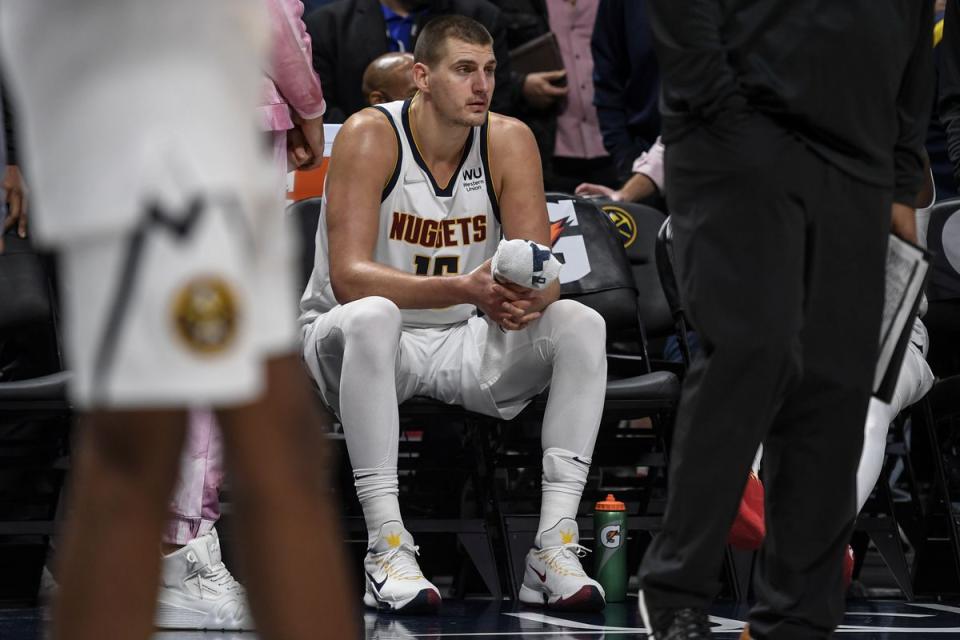
"Before games I feel fear, nervousness. After nearly 800 games, I still feel anxious stepping onto the court. But this tension is respect for the game; players who aren't nervous might consider changing sports."
On the court, Jokic is known for efficiency; the secret isn't exceptional talent but extreme rationality and restraint. "I never shoot difficult step-back shots over defenders. In a game with 15 attempts, 12 to 13 are from my常规位置."
He doesn't pursue flashy dunks or obsess over high shot counts; instead, he uses the most reasonable choices to create advantages for the team—floaters, hooks, precise passes. These seemingly朴实 actions are executed to perfection by him. He believes the core of modern basketball is "creating advantage." "Defense收缩, offense拉开—this truth applies to all sports."
Regarding basketball's future, he has his own judgment: "The era progresses, basketball modernizes. The future will be positionless basketball;天才球员 will increase, like Wembanyama—he is changing basketball." Regarding老一辈球员质疑现代篮球, he直言不讳: "It's not that old basketball was bad, but current players are more talented, stronger, faster.贬低现在 only seems狭隘又酸涩."
Off the court, Jokic is an ordinary person who loves family and enjoys平淡. He dislikes attention; as he ages, he increasingly prefers staying home.
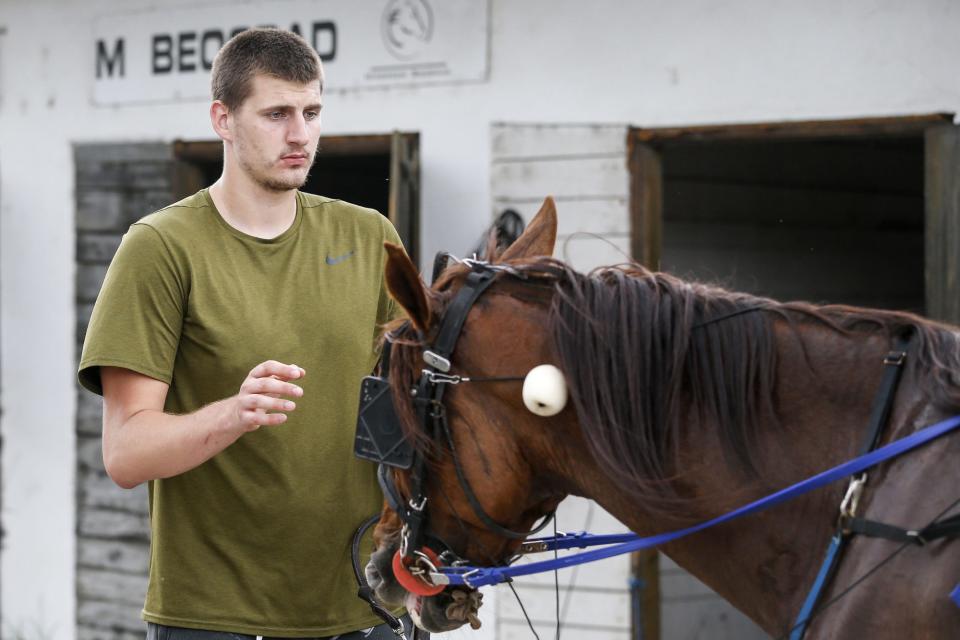
"Having a chef cook at home and being with family is the most comfortable state."After signing his first million-dollar contract, the first thing he bought wasn't a mansion or luxury car but a horse named "Dreamer""It's my project and the乐趣 in my平淡生活."
After becoming a father, his world gained an extra牵挂. "Looking forward to the child sleeping, then waking up; hearing the child call 'Dad,' hearing footsteps running on tile floors—that's the happiest thing." He still longs for his hometown Sombor, its cafes, Tamburica bands, and time with friends. "The happiest nights are with friends, listening to favorite music, chatting. This warmth cannot be replaced by any荣誉."
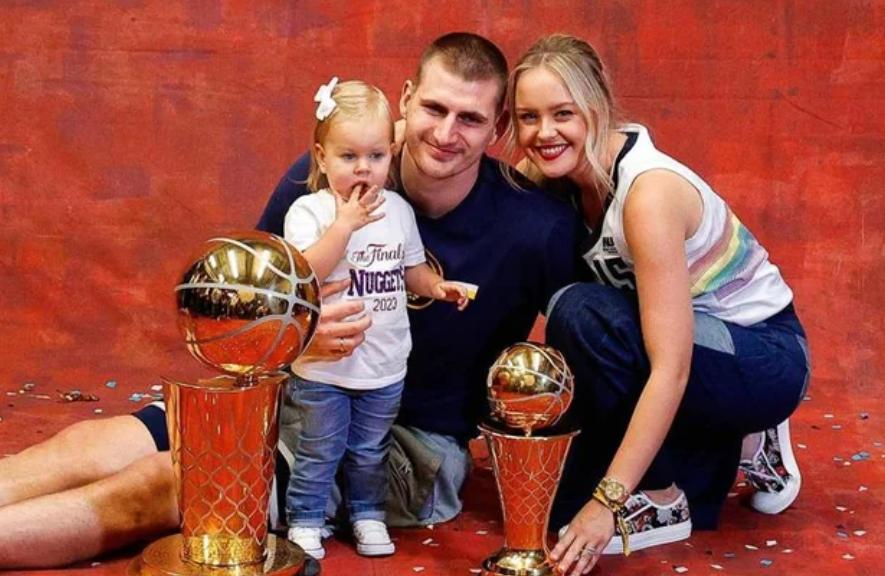
At the podcast's end, Jokic shared a reflection: "The winner is lonely."
This loneliness isn't isolation but独自承受训练的艰辛,康复的痛苦, and独自在赛场上对抗自我的执着. "There are five on the court, but ultimately you're fighting yourself. Training is一个人的事, weight loss is一个人的事; no one can do it for you, no one can win the game for you." But behind this loneliness is family support, friends' companionship, and love and坚守 for basketball.
From the hoop on the Sombor family door to the NBA championship trophy; from that crying little boy to the沉稳内敛 superstar, Jokic's life has no shortcuts, only purity and坚守. He interprets passion through basketball, character through humility, happiness through平淡. As his mother taught him:"Don't be proud in victory, don't be自卑 in defeat. Aim for the moon; even if you miss, you'll land among the stars."
This is Nikola Jokic,坚守本心 in the basketball world, embracing warmth in平凡生活.


Wonderfulshortvideo
Listen as the crowd roars at the sight of Tatum’s first run out this season! 🤩


Tatum gets the putback ➡️ three as his first and second buckets back since returning 🔥 🔥 🔥
AND with .6 to spare 🔥
Still not over this JT slam from last season 🤯
Cooper Flagg is elite by every metric 🔥
WHAT A SEQUENCE from the @Lakers! 🤩
Nikola Jokić recorded his league-leading 23rd triple-double of the season, 187th of his career 📊
 Links
Links
 Contact
Address:123
Number:+123
E-mali:i123@gmail.com
 App
App